
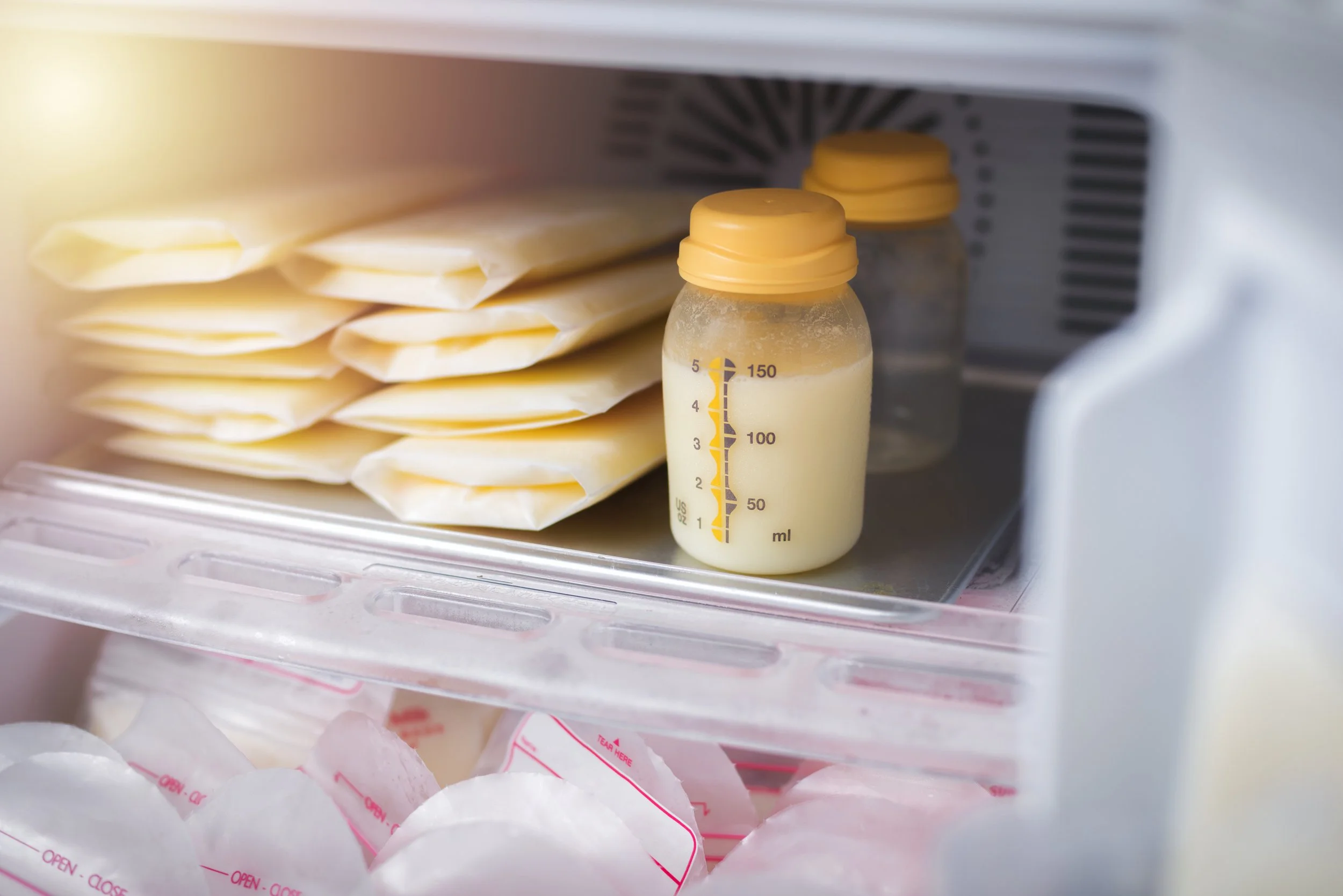
Expressing and storing your breastmilk can be empowering and convenient — whether you’re pumping for daycare, going back to work, or building a freezer stash. But since breastmilk is a living substance full of nutrients, antibodies, and protective components, it’s important to store it safely so your baby gets the best quality every time.
Before You Start: Cleanliness Is Key
Before expressing or handling your milk:
Wash your hands with soap and water.
Make sure breast pump parts and storage containers are clean and dry.
Use breastmilk storage bags or clean food-grade containers with tight lids made of glass or BPA-free plastic.
Never use disposable bottle liners or bags not specifically intended for breastmilk storage.
Storage Times: How Long Can Breastmilk Last?
Storage times depend on where the milk is kept. Both the CDC and ABM outline safe durations to help preserve quality and safety:
Freshly Expressed Breastmilk
Room temperature (up to 77°F / 25°C):
Up to about 4 hours.Refrigerator (at or below 40°F / 4°C):
Up to about 4 days.Freezer (0°F / −18°C or colder):
Within about 6 months is best; up to 12 months is acceptable.
The ABM storage guidelines — included in Protocol #8 — are consistent with this guidance for healthy, full-term babies.
Thawed Milk: What You Should Know
Milk that has been previously frozen needs special handling:
In the refrigerator (after thawing): Use within about 24 hours.
At room temperature: Use within about 1–2 hours.
Never refreeze milk that has completely thawed.
Fridge & Freezer Tips
To keep breastmilk safe and high quality:
Label each container with the date (and baby’s name if needed).
Store milk toward the back of the refrigerator or freezer, where temperatures are most consistent.
Leave about 1 inch of space at the top of containers — milk expands when freezing.
If refrigerated milk won’t be used soon, freeze it right away.
What About Leftovers?
If your baby doesn’t finish a bottle:
Use any leftover milk within about 2 hours after the feeding is done.
After that, it’s safest to discard it to reduce the chance of bacterial growth.
Storing Different Amounts
A few tips to reduce waste:
Store milk in small amounts (2–4 oz / 60–120 ml) that match your baby’s typical feeding.
If adding fresh milk to already chilled milk, cool the fresh milk first before combining.
How to Thaw & Warm Breastmilk
Breastmilk doesn’t have to be warm to feed — it can be served cold or room temperature. If you choose to warm it:
Place the sealed container in warm water or hold under warm running water.
Never heat breastmilk in the microwave or directly on the stove — hot spots can form and destroy nutrients.
Gently swirl (don’t shake) thawed milk before feeding to mix the cream that may have separated.
Why It Matters
Breastmilk is more than nutrition — it contains living cells, antibodies, enzymes, and hormones that support your baby’s immune system and development. Proper storage helps maintain those components while keeping milk safe and free from harmful bacterial growth. The CDC and ABM developed these guidelines to protect your baby’s health while making your storage routine as easy and practical as possible.
Quick Reference Chart
Storage LocationFresh MilkThawed MilkRoom TemperatureUp to ~4 hrsUp to ~1–2 hrsRefrigeratorUp to ~4 daysUp to ~24 hrsFreezer6–12 months (best within 6)Do not refreeze
(Times are approximate and for healthy, full-term babies. Check with a healthcare provider for preterm or medically complex infants.)